


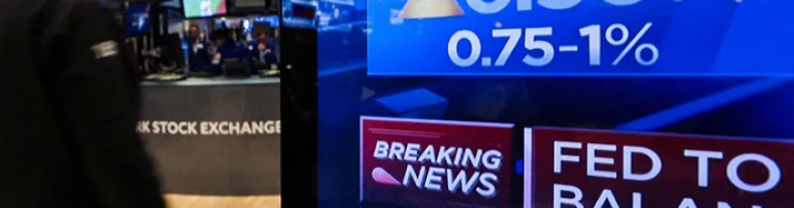
Stephen Miran, a Federal Reserve governor whose term ends at the end of January, said Thursday that he is looking for 150 basis points of interest-rate cuts this year to boost the U.S. labor market. Miran told Bloomberg Television's Surveillance program that Fed officials had room to further reduce rates given his view that underlying inflation was likely running at 2.3%. "I'm looking for about a point and a half of cuts. A lot of that is driven by my view of inflation," Miran said. "Underlying inflation is running within noise of our target, and that's a good indication of where overall...
The Australian dollar (AUD) continued its uptrend against the US dollar (USD) for the sixth straight session on Wednesday (16/4), with the AUD/USD pair holding firm after the release of the Westpac Leading Australia Index. The index's six-month annualized growth rate, which estimates economic momentum relative to trend over the next three to nine months, eased to 0.6% in March from 0.9% in February. China's economy grew at an annualized rate of 5.4% in the first quarter of 2025, matching the pace seen in Q4 2024 and beating market expectations of 5.1%. On a quarterly basis, GDP rose by 1.2%...
Oil prices were flat on Wednesday morning, as changes in U.S. trade policy fueled uncertainty as markets assessed the potential impact of the U.S.-China trade war on economic growth and energy demand. Brent crude futures rose 5 cents, or 0.1%, to $64.72 a barrel by 0039 GMT, while U.S. West Texas Intermediate crude futures rose 3 cents, or 0.1%, to $61.36. Both benchmarks fell 0.3% on Tuesday. Global oil demand is expected to grow at its slowest rate in five years in 2025 and U.S. production growth is also set to ease, due to U.S. President Donald Trump's tariffs on trading partners and...
The GBP/USD pair continued its uptrend that began on April 8, trading around 1.3250 during the Asian session on Wednesday (4/16). Earlier in the day, the pair touched a fresh six-month high of 1.3256. The pair has maintained its strong momentum, boosted by improving global risk sentiment after US President Donald Trump announced exemptions for major technology products from his new "reciprocal" tariffs. In the UK, labor market data showed on Tuesday that the unemployment rate held steady at 4.4% in February, in line with expectations. However, wage growth remained strong, maintaining...
The Japanese Yen (JPY) regained some ground after a modest decline the previous day as trade-related uncertainties kept investors on the sidelines and continued to favor traditional safe-haven assets. Additionally, data released today showed that Japan's core machine orders rose sharply in February, beating market expectations. This, coupled with hopes that Japan will reach a trade deal with the US and growing acceptance that the Bank of Japan (BOJ) will continue to raise interest rates in 2025, turned out to be another factor supporting the JPY. Meanwhile, the hawkish BOJ expectations...
Oil steadied after a modest decline on Tuesday as expectations of a supply glut and a trade war between the world's two largest economies weighed on the demand outlook. West Texas Intermediate crude futures were trading above $61 a barrel, with Brent crude closing near $65 in the previous session. The International Energy Agency on Tuesday cut its forecast for global oil consumption this year and next as trade tensions escalated. The supply build is likely to be more than enough to meet consumption, it said in a monthly report. Crude prices remain near four-year lows, after a sharp drop...
 Bank of Japan (BOJ) Governor Kazuo Ueda stated that achieving 2% inflation is getting closer, although real inflation remains low. Ueda emphasized that the BOJ will continue to raise interest rates...
 The Reserve Bank of Australia (RBA) maintained its cash rate at 4.1% during its April meeting, holding borrowing costs unchanged after slashing 25 bps in the February meeting, aligning with market...