


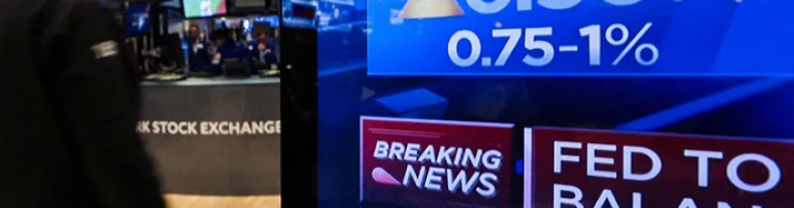
Stephen Miran, a Federal Reserve governor whose term ends at the end of January, said Thursday that he is looking for 150 basis points of interest-rate cuts this year to boost the U.S. labor market. Miran told Bloomberg Television's Surveillance program that Fed officials had room to further reduce rates given his view that underlying inflation was likely running at 2.3%. "I'm looking for about a point and a half of cuts. A lot of that is driven by my view of inflation," Miran said. "Underlying inflation is running within noise of our target, and that's a good indication of where overall...
Oil prices edged up on Thursday as investors weighed a weaker U.S. dollar, potential OPEC+ production increases, mixed economic news, conflicting U.S. tariff signals and news from the Russia-Ukraine war. Brent crude futures rose 43 cents, or 0.7%, to settle at $66.55 a barrel. U.S. West Texas Intermediate (WTI) crude rose 52 cents, or 0.8%, to settle at $62.79. In the U.S., the number of people filing for unemployment benefits rose slightly last week, indicating a resilient labor market despite economic turbulence caused by tariffs on imported goods. Companies raised prices and cut...
Gold prices rose on Thursday after falling more than 3% in the previous session, helped by a weaker dollar and bargain hunting, while market attention remained focused on the latest news on U.S.-China trade relations. Spot gold was up 1.4% at $3,333.90 an ounce, as of 1:46 p.m. EDT (1746 GMT). Bullion hit a record high of $3,500.05 on Tuesday on concerns about the U.S. economy, but prices fell on Wednesday after U.S. President Donald Trump walked back his threat to fire the Federal Reserve chief and appeared to soften his stance on China. U.S. gold futures settled 1.7% higher at $3,348.60....
Gold prices rose Thursday, on renewed demand from investors in the wake of the recent selloff. At 10:25 ET (14:25 GMT), Spot gold rose 0.9% to $3,317.19 an ounce, while gold futures expiring in June rose 1.1% to $3,329.65/oz. Gold had fallen from record highs this week after U.S. President Donald Trump raised the prospect of eventually reducing steep trade duties on China. But a lack of clarity on Trump's comments, coupled with less optimistic statements from other officials, made gold's fall short-lived. Traders remained cautious towards the dollar and Treasuries, keeping gold and the...
The US Dollar Index (DXY), which tracks the performance of the US Dollar (USD) against six major currencies, trades lower, roughly 0.60% on Thursday. The knee-jerk reaction originates from United States (US) President Donald Trump and US Treasury Secretary Scott Bessent. Both individually said that no unilateral offer was made to China from the US to lower tariffs, while Trump said that reciprocal tariffs could be revisited if negotiations are not going the way the Trump administration wants them to go, Bloomberg reports. On the economic calendar front, Durable Goods is painting a very...
Oil rose as investors weighed the prospect of more OPEC+ supply and the fallout from trade tensions between the US and China. Brent climbed toward $67 a barrel after sliding 2% on Wednesday, while West Texas Intermediate was around $63. The dollar weakened, making commodities priced in the currency more appealing. Growing strain within OPEC+, particularly with perennial overproducer Kazakhstan, has stoked fears that output will continue to rise at a faster-than-advertised pace over the coming months. The Organization of the Petroleum Exporting Countries and its allies will hold...
 Bank of Japan (BOJ) Governor Kazuo Ueda stated that achieving 2% inflation is getting closer, although real inflation remains low. Ueda emphasized that the BOJ will continue to raise interest rates...
 The Reserve Bank of Australia (RBA) maintained its cash rate at 4.1% during its April meeting, holding borrowing costs unchanged after slashing 25 bps in the February meeting, aligning with market...