


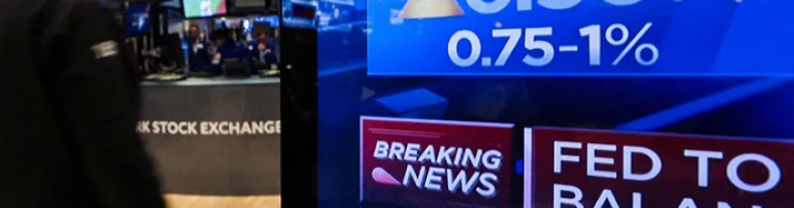
Stephen Miran, a Federal Reserve governor whose term ends at the end of January, said Thursday that he is looking for 150 basis points of interest-rate cuts this year to boost the U.S. labor market. Miran told Bloomberg Television's Surveillance program that Fed officials had room to further reduce rates given his view that underlying inflation was likely running at 2.3%. "I'm looking for about a point and a half of cuts. A lot of that is driven by my view of inflation," Miran said. "Underlying inflation is running within noise of our target, and that's a good indication of where overall...
The Japanese Yen (JPY) remains on the front foot against its American counterpart for the third consecutive day on Monday and seems poised to strengthen further amid a combination of supporting factors. The Tokyo Consumer Price Index (CPI) released on Friday indicated that core inflation accelerated more than expected in May and reaffirmed bets that the Bank of Japan (BoJ) will continue raising interest rates. Furthermore, persistent trade-related uncertainties and geopolitical risks turn out to be key factors underpinning the safe-haven JPY. Meanwhile, comments from Japan's top trade...
Oil prices rebounded more than $1 a barrel on Monday after OPEC+ decided to increase output in July by the same amount as it did in each of the prior two months, in line with market expectations. Brent crude futures climbed $1.19, or 1.9%, to $63.97 a barrel by 0044 GMT after settling 0.9% lower on Friday. U.S. West Texas Intermediate crude was at $62.09 a barrel, up $1.30, or 2.14%, following a 0.3% decline in the previous session. Both contracts were down more than 1% for the week. The Organization of the Petroleum Exporting Countries and their allies decided on Saturday to raise output...
The Australian dollar rose to around 0.646 on Monday, supported by a weakening greenback amid investor concerns over US President Donald Trump's tariff measures. On Friday, Trump announced plans to double tariffs on steel and aluminum imports from 25% to 50% effective June 4. The announcement, along with escalating US–China trade tensions, deepened investor anxiety over slowing growth and mounting inflationary pressures. In Australia, data showed the manufacturing sector weakened for the second consecutive month in May, falling to its lowest level since February a sign of slowing...
The euro (EUR) held steady against the US dollar (USD) on Friday (5/30) after a weaker-than-expected US Personal Consumption Expenditures (PCE) Price Index, which is close to the Federal Reserve's (Fed) 2% target, lifted the pair from an intraday low of 1.1312. EUR/USD was trading at 1.1361, barely changed on the day. The market mood remains fragile, shifting between optimism and pessimism, with US equities weighed on tariffs and trade news. The US Court of International Trade ruled that the tariffs were illegal and ordered Washington to lift them within ten days. However, the Trump...
U.S. crude futures fell on Friday as traders expected OPEC+ to decide on Saturday to increase oil output for July beyond previous estimates. Brent crude futures settled down 25 cents, or 0.39%, at $63.90 a barrel. U.S. West Texas Intermediate crude settled down 15 cents, or 0.25%, at $60.79 a barrel, after earlier dropping more than $1 a barrel. Brent July futures expire on Friday. The more liquid August contract fell 71 cents, or 1.12%, to $62.64 a barrel. At that level, the benchmark front-month contract was headed for a weekly loss of more than 1%. Prices dipped into negative territory...
 Bank of Japan (BOJ) Governor Kazuo Ueda stated that achieving 2% inflation is getting closer, although real inflation remains low. Ueda emphasized that the BOJ will continue to raise interest rates...
 The Reserve Bank of Australia (RBA) maintained its cash rate at 4.1% during its April meeting, holding borrowing costs unchanged after slashing 25 bps in the February meeting, aligning with market...