


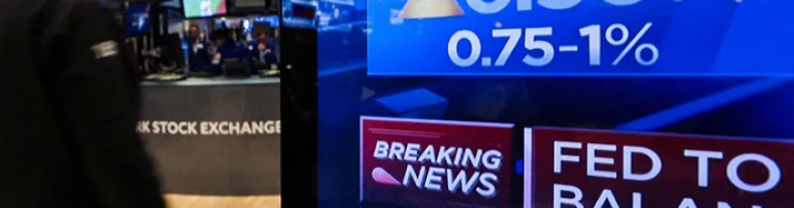
Stephen Miran, a Federal Reserve governor whose term ends at the end of January, said Thursday that he is looking for 150 basis points of interest-rate cuts this year to boost the U.S. labor market. Miran told Bloomberg Television's Surveillance program that Fed officials had room to further reduce rates given his view that underlying inflation was likely running at 2.3%. "I'm looking for about a point and a half of cuts. A lot of that is driven by my view of inflation," Miran said. "Underlying inflation is running within noise of our target, and that's a good indication of where overall...
Gold prices ticked higher on Friday, supported by uncertainty stemming from a slew of U.S. tariffs slapped on trading partners, although a stronger dollar kept bullion on track for a weekly loss. Spot gold was up 0.2% at $3,299.08 per ounce, as of 0553 GMT. Bullion is down 1.2% so far this week. U.S. gold futures edged up 0.1% to $3,351.60. "Gold has been in a $3,250 to $3,450 range for about two months now, and we see it heading towards the bottom end of the range and perhaps breaking it," said Marex analyst Edward Meir, adding that the dollar's strength was driven by the Federal...
The US Dollar Index (DXY), which measures the value of the US Dollar (USD) against six major currencies, remains stronger for the seventh successive day and is trading around 100.00 during the Asian hours on Friday. The Greenback surged as the US Personal Consumption Expenditure (PCE) Price Index report suggested that price pressures would increase in the second half of 2025 and delay the US Federal Reserve's (Fed) interest rate cuts until at least October. Traders await the United States (US) Nonfarm Payrolls (NFP), due later in the North American session, which is expected to hold in...
Gold prices were muted around $3,290 per ounce on Friday and were on track for its worst weekly performance since late June, pressured by a stronger US dollar following President Trump's introduction of higher tariffs on multiple countries. Trump reaffirmed a 10% global base tariff and imposed retaliatory duties of up to 41% on nations without trade agreements with the US. He also announced a 40% levy on goods suspected of being rerouted through third countries to bypass existing tariffs. Meanwhile, US data showed that both core and headline PCE prices exceeded expectations in June,...
The Australian dollar stabilized around $0.643 on Friday, halting a six-day losing streak as Australia avoided the latest US tariff hikes, with most imports remaining subject to the 10% rate. On Thursday, President Trump issued an executive order revising "reciprocal" tariffs on several countries—raising rates 10–41%—while countries not listed will face an automatic 10% duty and transshipped goods an additional 40%, taking effect seven days after the order. However, Australia avoided steeper tariffs, with its rate held at 10% despite earlier threats of a hike to 15–20%. The White House...
The Japanese Yen (JPY) touches a fresh four-month low against its American counterpart during the Asian session on Friday and seems vulnerable to weaken further. The Bank of Japan (BoJ) revised up its inflation forecasts on Thursday and offered a less gloomy outlook on the economy, keeping hopes alive for the resumption of rate hikes later this year. However, BoJ Governor Kazuo Ueda struck a dovish tone and signaled patience in policy normalization, to observe the tariff impact after the US-Japan trade deal. Furthermore, domestic political uncertainty, which has been fueling concerns about...
 Bank of Japan (BOJ) Governor Kazuo Ueda stated that achieving 2% inflation is getting closer, although real inflation remains low. Ueda emphasized that the BOJ will continue to raise interest rates...
 The Reserve Bank of Australia (RBA) maintained its cash rate at 4.1% during its April meeting, holding borrowing costs unchanged after slashing 25 bps in the February meeting, aligning with market...